Pogovor #31: Jonathan Stroud – “I think that writing for young readers is both an honour and a challenge.”
Jonathan: Navdih prihaja iz različnih smeri – morda so to pomembne teme, o katerih želiš spregovoriti (frakcijsko delovanje, narodnost, suženjstvo, politična korupcija…), morda so to žanri, ki jih obožuješ in s katerimi želiš eksperimentirati (fantazija, detektivke, zgodbe o duhovih …), morda pa so to mesta, ki jih obiščeš in obožuješ (London, Praga…). Ključno je poiskati načine, kako te elemente združiti – če ti to uspe, si lahko zabaven, hkrati pa obravnavaš pomembne teme. To je moja teorija!
Jonathan: Inspiration comes from many different angles – there might be important themes you want to talk about (factionalism, nationality, slavery, political corruption…), there might be genres you love and want to play with (fantasy, detective, ghost stories…), there might be cities you visit and adore (London, Prague…). The key is to look for ways that these elements can fuse – if you get it right, you can be entertaining while still addressing things that are important. That’s my theory, anyway!
Booknjiga: Moram pa povedati, da je zame kot odraslo bralko zelo malo takšnih knjig, ki me spomnijo na tisto otroško bralno strast, ko sem brala knjige in jih kar nisem mogla odložiti ter so me v primeru držale vse do zadnje strani. Zame je to res prava čarovnija, da lahko še vedno najdem takšne knjige in Lockwood & Co. so zagotovo med njimi!
Booknjiga: Firstly, I must say that for me as an adult reader, there are a few books which remind me of that childhood passion, when I read and couldn’t stop, when a book/story had me in its pages till the last one – and for me this is still some kind of magic, to still find books like that – and Lockwood & Co. is definitely one of them.
Jonathan: Hvala! To je res lepo slišati! / Thank you! That’s lovely to hear!
V slovenščini že imamo prevod vaše serije knjig Bartimejusova trilogija, malo manj kot deset let kasneje pa je že nastajala serija knjig Lockwood & Co.. Ali bi rekli, da se je v tem času v vašem pisanju za otroke kaj spremenilo? / We already have a Slovenian translation of your Bartimaeus Sequence, and a little less than ten years later after publishing in original, the Lockwood & Co. series was already in the works. Would you say that anything has changed in your writing for children during that time?
V knjigah o Bartimeju je bil v ospredju fantazijski element – magija, džini –, saj je bil glavni lik (in pripovedovalec) Bartimaeus duh. Njegovo srečanje z glavnim človeškim likom, Nathanielom, je bilo gonilo, ki je poganjalo zgodbo. V seriji Lockwood & Co. je ta ista mešanica elementov (fantastične nevarnosti proti človeški izkušnji) zelo prisotna, in še vedno sem se zabaval pri ustvarjanju alternativnega sveta. A mislim, da je bil moj pravi poudarek v tej drugi seriji na nefantastičnih odnosih med glavnimi junaki, zlasti na načinu, kako se Lucy najprej spoprijatelji z Lockwoodom in Georgeom, nato pa tudi z drugimi liki. To je bistvo zgodbe.
In the Bartimaeus books, the fantasy element – the magic, the djinn – was foregrounded, because the main character (and narrator), Bartimaeus, was a djinni himself. The collision between him and the main human character, Nathaniel, was the engine that powered the book. In Lockwood & Co., the same mix of elements (fantastical dangers versus the human experience) is very much there, and I still had fun creating an alternative world. But I think my true focus in this second series was the non-fantastical relationships of the protagonists, particularly the way that Lucy first becomes friends with Lockwood and George, and then with the other characters too. This is the beating heart of the story.
Pa je pri pisanju za otroke (najstnike) kaj drugačno? / Would you say that’s writing for children (teens) any different?
Pisanje za mlade bralce je hkrati čast in izziv. Otroci in mlajši bralci so še posebej odprti in dovzetni za zgodbe, zato bodo knjige, če jih boste napisali pravilno, ostale z njimi za vedno. Je pa res, da to ni vedno najlažje. Želijo si razburljive zgodbe, ki jih silijo, da obračajo strani, a so prav tako odprti za zapletene ideje kot starejši bralci. Vedno je moj cilj napisati nekaj, kar bi bilo privlačno tako za mlajše kot tudi za starejše bralce.
Otroci so danes enaki kot so bili vedno – večino svojega časa ugotavljajo, kdo so in kaj želijo postati, vendar pa so izpostavljeni vse večjim pritiskom. Najstniki so obkroženi z neskončnimi dražljaji, zahteve po njihovem času, energiji in miselnih zmogljivostih pa so vedno večje. Kar pa je zanje zelo zahtevno. Menim, da mladi bolj kot kdaj koli prej potrebujejo zgodbe, ki jim pomagajo ustvariti prostor okoli sebe. Pravzaprav trenutno delam na interaktivni seriji, ki bo mlajšim bralcem omogočila, da bodo pri branju lahko soodločali o zgodbi, in ta jim bo pomagala, da se bodo počutili kot del sveta mojih likov.

I think that writing for young readers is both an honour and a challenge. Children and younger readers are particularly open and responsive to stories, so if you get it right, your books will stay with them for ever. But it’s not the easiest thing to do. They want exciting and stimulating stories, that keep them turning the pages, but they are also just as open to complex ideas as older readers. My aim is always to write something that would be attractive to younger AND older readers at the same time.
Children today are just the same as they have always been – they are busy finding out who they are and what they want to be. But there are increasing pressures upon them. Teenagers are bombarded by endless stimuli, with ever-growing demands on their time, energy and brain space. That’s very challenging for them. I think that young people need stories more than ever to help create space around them. In fact, I’m working on an interactive series at the moment which will help give younger readers agency when reading and help them feel part of my character’s world.
Na vaši spletni strani sem prebrala, da ste nekaj časa delali kot urednik otroških knjig. Kakšno popotnico vam je to dalo za pisanje lastnih? / I read on your website that you worked as a children’s book editor for a while. How did that experience help you when you started writing your own books?
Po končani univerzi sem dobil službo pri založbi Walker Books v Londonu. To je bil odličen uvod v svet otroških knjig, pisanja in poslovne strani založništva. Več let sem delal kot urednik: pomagal sem avtorjem pri njihovih idejah in besedilih, se posvetoval z oblikovalci in ilustratorji glede vizualne podobe ter sodeloval pri ustvarjanju najrazličnejših knjig. To me je naučilo veliko o strukturi, ritmu in slogu; medtem pa sem v prostem času pisal tudi sam. Učenje poklica urednika je bilo absolutno ključno; vedno sem bil hvaležen za tista leta pri Walkerju, kjer sem se naučil, kako se igrati z besedilom in se ne bati, da bi kaj izbrisal ali spremenil; to je bistveni del tega poklica.
After I left university, I got a job at Walker Books, in London. It was a brilliant introduction to the world of children’s books, writing and the business side of things. For several years I worked as an editor: helping authors with their ideas and their texts, consulting with designers and artists about the visual side, helping to create books of many kinds. This taught me a lot of things about structure, pace and style; meanwhile, in my free time, I was busy writing also. Learning my trade on the editorial side was absolutely crucial; I’ve always been grateful for those years at Walker, learning how to play around with text, and not being afraid of tearing things up, changing things around; it’s a vital part of the trade.
Od kod jemljete navdih za tako skrivnostne, napetosti polne in tudi malce grozljive zgodbe? / Where do you get your inspiration for such mysterious, suspenseful, and even slightly scary stories?
Ideje prihajajo od vsepovsod in te lahko prešinejo kadarkoli. Eno zelo dobro sem nekoč dobil kar v kopeli! Ideje so lahko velike ali majhne – presenetljiva spoznanja ali nedodelani osnutki. Mislim, da izvirajo iz skoraj vsega: od ljudi, ki jih srečaš, krajev, kamor greš, stvari, ki jih prebereš, pogovorov, ki jih slučajno slišiš, sanj, časopisov, današnjih televizijskih oddaj, spominov iz otroštva. Pomembno je, da jih zapišeš takoj, ko se pojavijo, sicer se hitro izgubile.
Potem ko sem napisal knjige o Bartimeju, sem se poigraval z nekaj različnimi idejami za zgodbe. Že nekaj let sem si želel poskusiti napisati zgodbo o duhovih – vedno sem imel rad dobre, srhljive zgodbe. Nisem pa bil povsem prepričan, kako naj to storim – večina zgodb o duhovih je namreč zelo kratkih in (neizogibno) nekoliko mračnih. To mračnost sem želel združiti z bolj veselo pustolovsko pripovedjo. Nekega dne sem se usedel in napisal kratko sceno, v kateri dva otroka – oblečena v sodobna oblačila, a z meči – potrkata na vrata hiše v Londonu. Prišla sta, da se spopadeta z duhom, ki tam živi. Nisem imel niti najmanjše ideje, kakšna bo širša zgodba, a mi je bil všeč njen potencial. V moji knjigi o duhovih bodo otroci dobili moč. Zunanji svet je grd, a pogum, timsko delo in smisel za humor (ne smemo pozabiti na velike meče) so tisti, ki bodo na koncu rešili svet.
Ideas come from everywhere and can hit you at any time. I once got a very good one in the bath! Ideas can be big or small – crashing insights or half-baked intuitions. I think they come from almost anything: people you meet, places you go, things you read, conversations overheard, dreams, newspapers, today’s television, childhood memories. The thing to do is write them down when you get them, or they’ll quickly drift away.
After I’d written the Bartimaeus books, I was playing around with a few different story ideas. For some years I’d wanted to try my hand at a ghost story – I’ve always been partial to fine chilling tales. I wasn’t quite sure how to do it, though – most ghost stories are very short and (necessarily) somewhat morbid. I wanted to combine this darkness with a more upbeat adventure narrative. One day I sat down and wrote a short scene in which two children – dressed in modern clothes, but with swords – knock on the door of a house in London. They’ve come to deal with the ghost that lives there. I had absolutely no idea what the wider story was, but I liked the potential of it. In my book of ghosts, the kids are going to be empowered. Nasty things are out there, but bravery, teamwork and a sense of humour (not forgetting some big swords) will provide the means to save the day.
V Lockwood & Co. je glavna pripovedovalka punca Lucy, kako se vam je uspelo tako dobro vživeti v njen karakter? Pomagajo pri tem tudi vaši ali drugi otroci? / In Lockwood & Co., the main narrator is a girl named Lucy. How did you manage to get so deeply into her character? Do your or other children help you with that?
No, v uvodni sceni je bila pripovedovalka Lucy – tako da sem že od samega začetka slišal ravno njen glas. In zelo mi je všeč, da je v središču zgodbe ženski lik. V mojem življenju je veliko čudovitih, zanimivih in močnih žensk, zato se mi je to zdelo povsem naravno.
Kasneje sem se sicer spraševal, ali naj to obrnem in naj v drugem delu pripoveduje Lockwood, v tretjem pa George. Poskusil sem pisati iz Lockwoodove perspektive, a mi ni uspelo. Je precej skrivnosten in pustolovski, zato je dobro, da je nekoliko v ozadju, medtem ko nam Lucy služi kot posrednica. Poleg tega mi je bilo všeč pisati v Lucyinem slogu, zato sem se na koncu odločil, da bo vseeno ona pripovedovalka.
Well, Lucy was the narrator in that opening scene – so right from the beginning, it was her voice that I heard. And I quite like having a female character as the centre of the story. I have lots of fantastic, interesting, strong women in my life, so it felt very natural to do this.
Later on, I did wonder whether I should change it round, and have Lockwood narrating the second book, and George narrating the third. I tried writing from Lockwood’s perspective, but it didn’t work. He is quite a mysterious swashbuckling character, and it’s good to have him slightly at one remove, with Lucy as our intermediary. And anyway, I was enjoying writing in Lucy’s voice, so I ended up staying with her.
Zgodba je postavljena v London, vendar v takrat, ko še ni bilo moč uporabljati elektronskih naprav, prenosnih telefonov, računalnikov… Odlično se mi zdi, da George svoja raziskovanja o duhovih in dogodkih opravi v knjižnici med natiskanimi knjigami, časopisi. Čemu taka odločitev? / The story is set in London, but at a time when electronic devices, cell phones, and computers didn’t exist yet… I think it’s brilliant that George conducts his research on ghosts and events in the library, surrounded by printed books and magazines. Why did you decided to put in the past?

Predstavljal sem si, da se je v petdesetih letih od nastanka Problema tehnološki napredek vedno bolj upočasnjeval. Ljudje ne delajo več toliko – ob štirih popoldne zaprejo svoja podjetja –, pozimi pa se hitro odpravijo domov in se skrijejo za zavesami. Tista industrija, ki še obstaja, se ukvarja predvsem z bojem proti duhovom. Zato je bilo logično, da v tem svetu še niso izumili računalnikov in telefonov. To mi je bilo še posebej všeč, ker je zgodba zaradi tega delovala kot vrnitev v 70. leta, ko sem bil mlad. Ta element je potem prevzela tudi televizijska serija.
I was imagining that for the fifty years of the Problem, there’s been less and less technological advancement. People aren’t working so much – they’re shutting up shop at four o’clock in the afternoon – on a winter’s night, they shoot home and cower behind their curtains. What industry there is, is going towards trying to deal with the ghosts. So it made sense that computers and phones haven’t been invented in this world. I liked this particularly because it made the story feel like a throwback to the 1970s, when I was young. This element was taken up by the TV show too.
Zakaj ste se za novo serijo knjig odločili ravno za temo duhov, kako je do tega prišlo? Kako so nastala imena različnih kategorij duhov? Kako je nastala odločitev, da samo otroci vidijo duhove in se proti njim borijo (do neke starosti)? Tako dobro namreč zgradite celoten svet, pripomočke in vrste duhov, da bralca v to resnično potegne in skoraj verjame, da je resnično. / Why did you choose the theme of ghosts for your new book series, and how did that come about? How did you come up with the names for the different categories of ghosts? How did you decide that only children can see ghosts and fight them (up to a certain age)? You’ve built the entire world, the props, and the types of ghosts so well that it truly draws the reader in and makes them almost believe it’s real.
Vedno sem imel rad zgodbe o duhovih in sem želel raziskati, kaj bi se zgodilo, če bi dejansko obstajali. Kot vse moje serije se tudi ta začne z dokaj preprosto izhodiščno točko (da duhovi obstajajo) in se nato razvija naprej, pri čemer raziskuje posledice te predpostavke. Zelo rad ustvarjam tridimenzionalne svetove, ki so na tak način notranje dosledni. To je hkrati težko, a nekako zelo zadovoljujoče, ko se vse začne povezovati v celoto. Sčasoma pa postaja tudi lažje …
Z različnimi vrstami duhov sem se zelo zabaval. Nekateri so tradicionalni (kot na primer poltergeisti), za druge pa sem si pravila izmislil sam. Vedno je dobro, da obstoječa pravila iz sveta fantazije – iz ljudskega izročila in pravljic – prepletemo z novimi idejami in koncepti: tako dobimo nekaj, kar deluje trdno in resnično. Od začetka sem vedel, da jih lahko vidijo le otroci – to izraža dejstvo, da so mladi na splošno bolj občutljivi in »odprti« za stvari kot odrasli. Ta ideja je nato vodila k razvoju zapleta: bilo je zanimivo raziskati, kaj se zgodi, ko Lucy začne govoriti z duhovi, namesto da se z njimi le sooča.
Del zabave pri pisanju serije Lockwood & Co. je bil zame v tem, da sem si predstavljal, kakšne posledice bi imela epidemija duhov za družbo. Mislim, da bi se ljudje odzivali različno: nekateri bi se obrnili k veri ali pa se ji uprli; drugi bi iskali načine, kako se zaščititi – bodisi s pomočjo tehnologije bodisi s pomočjo čudnih okultnih teorij. Tehnologija bi se uporabljala za fotografiranje ali spremljanje duhov, vendar bi nanjo lahko negativno vplivale nadnaravne sile. Sumim, da bi pojav duhov motil delovanje računalnikov, kar bi nas prisililo, da se zanesemo na bolj primitivne oblike komunikacije.
I’ve always liked ghost stories, and I wanted to explore what would happen if ghosts actually existed. Like all my series, it starts from a fairly simple premise (ghosts exist) and then works outwards, developing the consequences of that premise. I really like making three-dimensional worlds which are internally consistent in this way. It’s quite hard, but somehow very satisfying when it begins to mesh together. And it gets easier as it goes along, too …
I had a lot of fun with the categories of ghosts. Some of them are traditional types (such as Poltergeists), and I invented the rules for the others. It’s always a good idea to mingle existing fantasy rules – from folklore and fairy tales – with new ideas and concepts: that way you get something that feels robust and real. I knew from the start that only children can see them – this expresses the truth that young people are generally more sensitive and ‘open’ to things than adults. This idea then led to plot developments: it was interesting to explore what happens when Lucy starts talking to ghosts, instead of just confronting them.
Part of the fun for me of writing Lockwood & Co was imagining the implications for society of an epidemic of ghosts. I think that people would react variously: some would turn to religion, or turn against it; others would seek ways of keeping safe – either through technology, or weird occult theories. Technology would be used to photograph or monitor the ghosts, but might be adversely affected by the psychic forces. I suspect hauntings would subtly mess up the workings of computers, forcing us to rely on more primitive forms of communication.
Lockwood, Lucy in George (in načeloma tudi drugi otroci) so morali zaradi svojih preizkušenj zelo hitro odrasti, hkrati pa z majhnimi namigi v knjigi še vedno lahko razberemo, da so otroci (zbadajo en drugega, zelo radi jedo sladkarije in torte, niso vsi ravno tidy). Kaj lahko to pomeni mladim bralcem? / Lockwood, Lucy, and George (and, in principle, the other children as well) had to grow up very quickly because of the trials they faced, yet subtle hints in the book still reveal that they are children (they tease each other, love sweets and cakes, and aren’t exactly tidy). What might this mean to young readers?
To se dotika bistva zgodbe, namreč da so naši junaki resnično mladi, hkrati pa morajo nositi zelo odraslo breme. Njihova hiša, 35 Portland Row, je »varen« prostor, kjer lahko pride do izraza njihova mlajša plat – kjer lahko prirejajo gostije, se prepirajo in šalijo med seboj, preden se ponovno odpravijo v temo. In mislim, da to izraža širšo resnico, in sicer, da vsi še vedno nosimo v sebi otroka, ne glede na to, koliko smo stari. Pomembno je, da tega ne izgubimo, ne glede na to, kaj nam svet prinaša.
This delves to the heart of the book, which is that our heroes ARE young, while at the same time having to take on a very adult burden. Their house, 35 Portland Row, is the ‘safe’ space where their younger side can come out – where they can have feasts, and argue, and joke with each other, before going back out into the darkness. And I think this expresses a wider truth, which is that we all still have our child selves inside us, no matter how old we are. It’s important not to lose sight of that, no matter what the world throws at you.
Kot odrasla bralka se velikokrat pogovarjam o knjigah za mladino, in Lockwood & Co. je napisana tako, da mladih bralcev ne podcenjuje, ne razlaga preveč o tem svetu, temveč nam želi pokazati skozi karakterje, dejanja, dogodke. Kako zahtevno je tako pisanje in ali zahteva veliko raziskovanja, načrtovanja? / As an adult reader, I often talk about books for young adults, and Lockwood & Co. is written in a way that doesn’t underestimate young readers or over-explain this world, but instead seeks to show it to us through the characters, their actions, and the events. How challenging is this kind of writing, and does it require a lot of research and planning?
Knjige, ki si jih prebral v otroštvu – še posebej tiste, ki te najdejo na pragu odraslosti –, so tiste, ki ti ostanejo za vedno. Imajo najgloblji vpliv in največjo moč. Za pisatelja je to nekaj za kar si je vredno prizadevati. Najboljše otroške knjige so privlačne za vse starosti. Vedno poskušam zadovoljiti dva hipotetična bralca hkrati: otroškega, ki sem bil, in odraslega, ki sem zdaj. To pomeni, da mi pisanje vseh mojih knjig vzame precej časa: na koncu veliko prepisujem in popravljam, ker poskušam najti pravo ravnovesje med tema perspektivama.
The books that you read as a child – particularly the ones that snare you on the cusp of adulthood – are the ones that remain with you always. They have the deepest effect and the most sustained power. As a writer, that’s something worth aspiring to. And the best children’s books are attractive to any age. I always try to please two hypothetical readers simultaneously: the child I was and the adult I am now. This means that all my books take quite a long time to write: I end up doing a lot of rewriting and revising as I try to find the right balance between these perspectives.

Ste že na začetku vedeli, kaj ta Problem bo – ste si celotno serijo Lockwood & Co. zamislili vnaprej in že vedeli, kako se bo 5. knjiga zaključila ali je ta navdih prihajal sproti s pisanjem? / Did you know from the start what this Problem would be—did you plan out the entire Lockwood & Co. series in advance and already know how the fifth book would end, or did the inspiration come to you as you wrote?
Ko sem začel pisati, nisem še vedel, kako se bo serija končala.. Pravzaprav nisem vedel niti, koliko knjig bo, niti kakšna bo dejanska zgodba. Običajno začnem z neko sceno ali idejo in to najprej napišem, šele potem pa začnem graditi naprej. To je kot če bi sestavljanko začel sestavljati s sredine in jo od tam počasi dopolnjeval. Zelo hitro sem moral določiti pravila sveta, nato pa sem začel ugibati, kako se bo zgodba končala, vendar mislim, da sem šele med delom na tretji knjigi »videl«, kako se bo končala peta knjiga. Menim, da je dobro, da zgodbo na tak način čim dlje pustiš »odprto« – tako ostanejo stvari med pisanjem tekoče in ustvarjalne. Ugotavljam, da je moje pisanje mešanica dveh stvari: racionalne, strukturne strani, ki rada ustvarja vzorce in razmišlja o strukturi zgodbe, ter divje, improvizacijske strani, ki vedno pleše v različne smeri. Mislim, da je ravno napetost med tema dvema stranema tista, ki omogoča, da knjige delujejo.
I didn’t know the end to the series when I began writing. In fact, I didn’t know how many books there would be, or what the actual story was. I usually start with a scene or idea and write this, before beginning to build outwards from that. It’s like starting a jigsaw in the middle, and slowly constructing it from there. Quite quickly, I had to establish the rules of the world, and then I began to guess at the ending, but I think I only ‘saw’ how Book 5 would finish when I was working on Book 3. I think it’s good to keep your plot ‘open’ in this way for as long as possible – it keeps things fluid and creative as you write. I find that my writing experience is a mix of two things: a rational, structural side, that likes to make patterns and figure out story structures, and a wilder, improvisational side, that is always dancing off in different directions. The tension between the two sides is what makes the books work, I think.
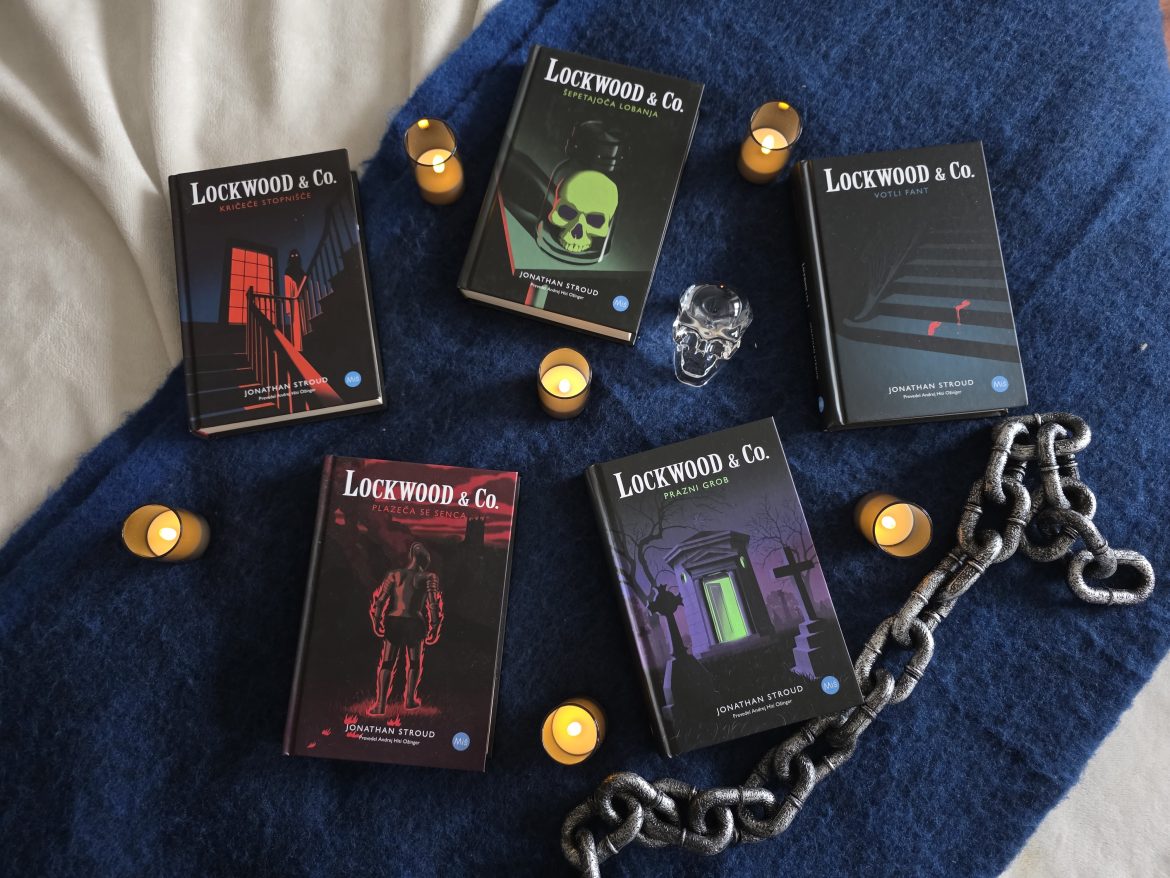
Kakšne se vam zdijo slovenske naslovnice vaših knjig Lockwood & Co.? Kako pomembne so naslovnice za odraščajoče otroke pri branju? / What do you think of the Slovenian covers of your Lockwood & Co. books? How important do you think are book covers for young readers?
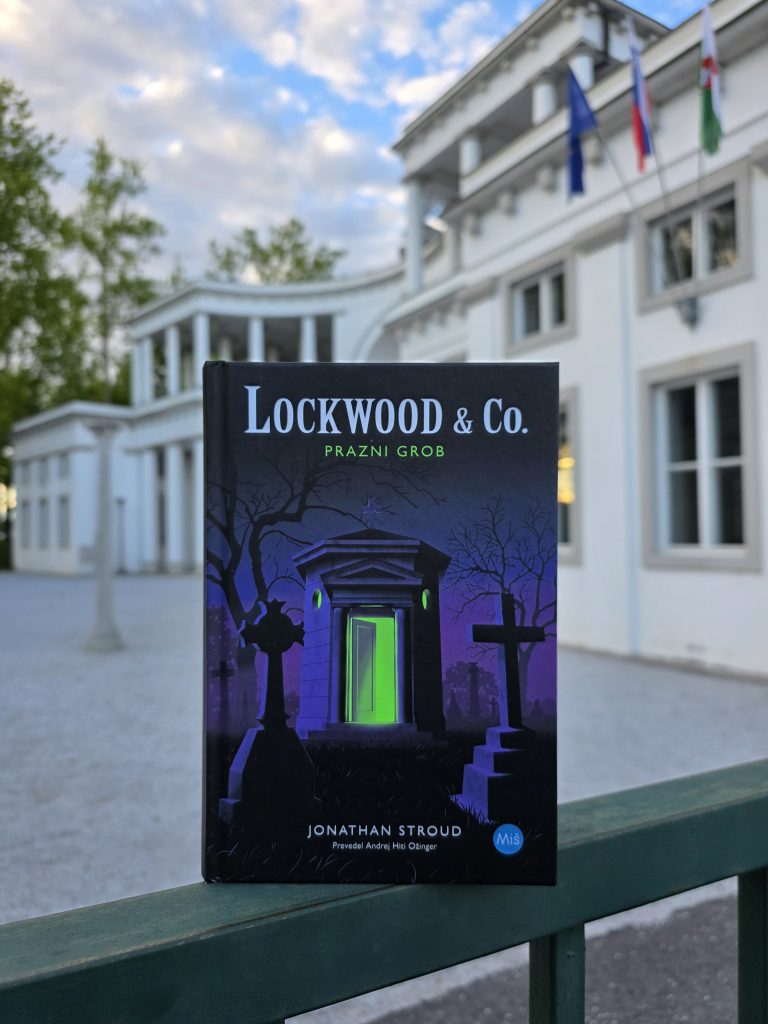
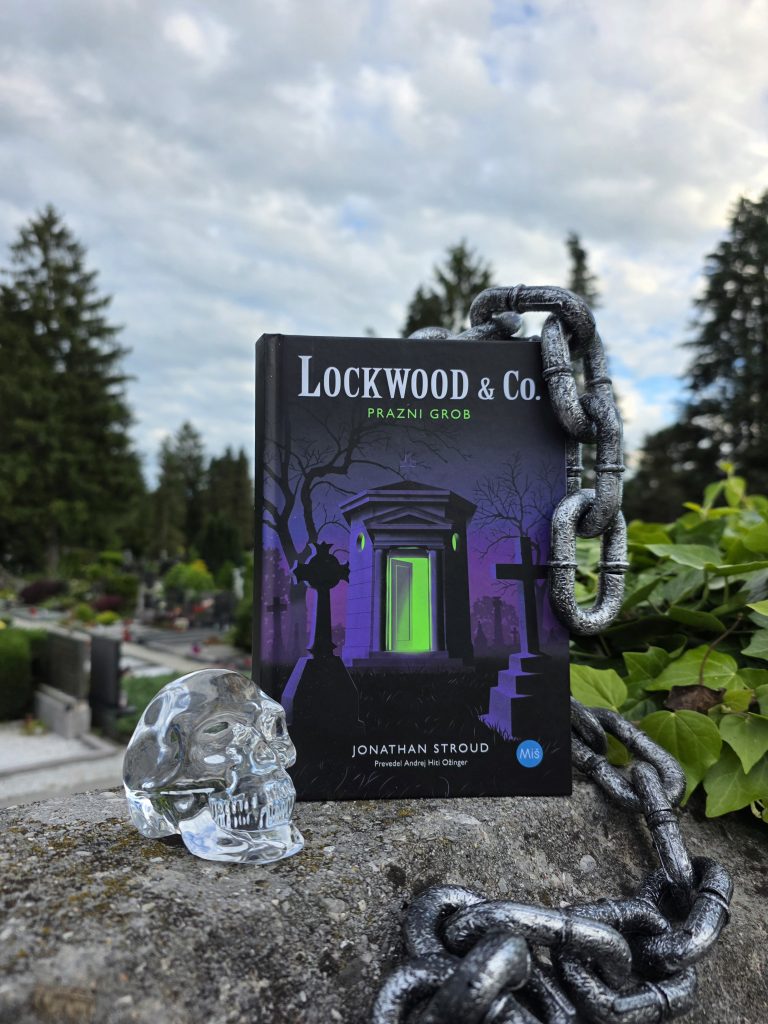
Naslovnice so ključnega pomena in lahko odločilno vplivajo na uspeh serije. To velja za knjige namenjene bralcem vseh starosti. Ena od največjih radosti, ki jih prinaša izdajanje mojih knjig v različnih državah, je opazovanje, kako raznolike so lahko naslovnice. Slovenske naslovnice so mi zelo všeč. Naredil jih je Matija Medved, ki ustvaril nekaj resnično čudovitega. Všeč mi je njihova mračna eleganca. So strašljive, prefinjene in lepe: več si ne bi mogel želeti.
Covers are crucial and can make or break a series. This is true for books aimed at any age. One of the real delights of having my books published in different countries, is seeing how varied the covers can be. I absolutely love the Slovenian covers. They’re by Matija Medved, and he’s created something truly wonderful here. I love how darkly elegant they are. They scary, sophisticated and beautiful: I couldn’t ask for anything more.
Po prvih dveh knjigah iz serije je nastala tudi Netflix serija, ste pri tem vse prepustili svoji agentki, ste bili morda kaj vpleteni v sam nastanek, vas je to, da bo serija posneta kaj razveselilo? Žal niso odobrili nadaljevanja ☹ / After the first two books in the series, a Netflix series was also produced. Did you leave everything to your agent, or were you perhaps involved in the production process? Were you excited to hear that the series would be filmed? Unfortunately, they didn’t approve the sequel ☹
Pri seriji sem bil tudi svetovalec, kar mi je bilo v veliko veselje. Ekipa pri Complete Fiction, ki je producirala televizijsko serijo, je bila izjemno predana knjigam in si je prizadevala ostati zvesta bistvu mojega pisanja. Imel sem srečo, da so bili tako navdušeni nad liki in zgodbo, njihove odločitve pa so bile vedno briljantne, večinoma tudi brez moje pomoči. Vendar sem lahko prebral scenarije in odgovarjal na vprašanja, ki so se pojavila med produkcijo, česar sem se zelo razveselil. Končni izdelek me je popolnoma navdušil. Žal mi je, da druge sezone ni bilo, vendar še vedno menim, da je bilo tisto, kar so ustvarili Joe Cornish in ekipa, pravi uspeh. Kot avtor sem zelo srečen!
I was a consultant on the series, and this was a great pleasure. The team at Complete Fiction, who produced the TV show, were incredibly dedicated to the books, and wanted to be true to the essence of my writing. I was incredibly lucky that they were utterly passionate about the characters and the story, and their decisions were always brilliant, mostly without my help. But I was able to read the scripts and answer questions about anything that came up during the production, and it was a joy to do. I was utterly thrilled by the resulting show. It was sad that the second series didn’t happen, but I still think what Joe Cornish and the team created was a triumph. I’m a very lucky author!


V tem mesecu boste v okviru Založbe Miš obiskali Slovenijo – bo to vaš prvi obisk ali ste že bili? (Če ne, česa si posebej želite videti?) Kako pomembno se je povezati z mladimi bralci? / This month, you’ll be visiting Slovenia as part of the Miš Publishing House—will this be your first visit, or have you been there before? (If not, what in particular would you like to see?) How important do you think it is to connect with young readers?
Menim, da je za avtorja ključnega pomena, da se odpravi med ljudi in spozna svoje bralce. Še vedno se spominjam srečanj z avtorji, ko sem bil mlad, in kako me je ta izkušnja navdihnila – in to velja tudi v obratni smeri. Javne prireditve prinašajo navdušenje in energijo, ki navdihujejo tudi avtorje!
Neizmerno se veselim, da bom ta teden prišel v Slovenijo. Po državi sem že potoval z avtomobilom, a to bo moj prvi pravi obisk in prvič bom v Ljubljani. Slišal sem veliko lepega o njej in upam, da bom obiskal grad ter se sprehodil po starem mestnem jedru. Povedali so mi, da je tudi Narodna in univerzitetna knjižnica zelo navdihujoča. V čast mi je, da so me povabili, in zelo sem hvaležen vsem v založbi Miš, da so mi ponudili to čudovito priložnost.
I think it’s essential for an author to get out and meet his or her readers. I still remember meeting authors when I was young, and being really inspired by the experience – and that holds true the other way round. There’s an excitement and an energy about public events that inspires authors too!
I am beyond excited to come to Slovenia this week. I have driven through the country before, but this will be my first proper visit, and my first time in Ljubljana. I have heard many great things about it, and I’m hoping to visit the castle and wander the old town. I’ve been told the National and University Library is very inspiring too. It’s an honour to have been invited, and I’m very grateful to everyone at Miš for giving me this fabulous opportunity.
Poslušaj tudi (v slovenščini):

Preberi še:
- Gašper Stražišar (Dnevnik): Jonathan Stroud: Moji liki so vsa kompleksna vprašanja pravzaprav raziskovali v mojem imenu
- Žiga Kastelic (Študent): (INTERVJU) Jonathan Stroud o pisateljskih sanjah: »Knjige, ki jih prebereš mlad, postanejo del tvojega življenja«
Hvala založbi Miš, da je avtorja pripeljala v Slovenijo, za prijetno in nadvse zabavno sodelovanje in recenzijske izvode knjig. Knjige Lockwood & Co najdete na povezavi.